
Back to Courses







Social Sciences Courses - Page 3
Showing results 21-30 of 672
Reaching Vulnerable Groups through Pandemic Policy
This course aims to provide an in-depth reflection on social work in different contexts, hereby focusing on their needs, the way the contexts have been influenced, and different challenges that have occurred during the last two years.
It aims to set up conversations with multiple professionals where they give information about the hurdles on their path, the lessons learned from these turbulent times, and to give an overview of important ideas and practices that could help reshape the future of social work.
In the end, the goal is to provide specific, hands-on, best practices collected from literature and professionals in Belgium and Europe that help organise social work, both during and after a pandemic.
This course was developed as part of the research project 'Pan-European Response to the Impacts of the COVID-19 and future Pandemics and Epidemics' (PERISCOPE, https://www.periscopeproject.eu/). Funded by the European Commission Research Funding programme Horizon 2020 under the Grant Agreement number 101016233, PERISCOPE investigates the broad socio-economic and behavioural impacts of the COVID-19 pandemic, to make Europe more resilient and prepared for future large-scale risks.
Richard Schechner's Introduction to Performance Studies
Performance Studies: An Introduction explores the wide world of performance--from theatre, dance, and music to ritual, play, political campaigns, social media, and the performances of everyday life. Performance studies also ranges across cultures--Asia, Africa, the Caribbean, Europe, the Americas. And it spans historical periods from the art of the paleolithic caves to YouTube and the avantgarde. This course is devised by Richard Schechner, one of the pioneers of performance studies, in dialogue with more than a dozen expert scholars and artists. Performance Studies: An Introduction puts students in dialogue with the most important ideas, approaches, theories, and questions of this dynamic, new academic field.
Learning Objectives
By the end of this course, you should be able to:
Articulate and analyze the major concepts of performance studies
Identify and analyze performances within the “broad spectrum of performance”--from everyday life and social media to performance art and global spectacles such as the Olympics
Comprehend key terms of performance studies, including is/as performance, restored behavior, ritual, play, make-belief/make-believe, performance in everyday life, the performative, and intercultural performance
Produce collaborative work that demonstrates teamwork in applying ideas learned in the course
Compare, analyze, and interpret performances of their own and other cultures
Articulate how the major concepts of the course relate to their own experiences and worldviews
Analyze and criticize in a constructive way the work of classmates
The lessons present Schechner’s concept of performance studies along with online assignments. In the assignments, students apply what they are learning by composing short responses to materials, writing in their NYU Classes Forums, and by reviewing other students’ forum posts each week.
Students choose either to work in groups of 3 to 5 on a term-long project maintaining a project portfolio in NYU Classes or to write a research paper. During the term, each group will lead an in-class 25-minute discussion of their project-in-progress. During the last face-to-face class, each group will present their project.
The weekly content is:
What is Performance?
What is Performance Studies?
Performance Processes
From Not Performing to Performing
Ritual
Play
Performing in the Paleolithic
Ramlila of Ramnagar
The Performing Brain
Performativity
Constructing Social Roles
Social Media
Intercultural, Transcultural, Global
Group Projects & Wrap Up
Course Requirements
Each student is required to complete the week’s online lesson prior to the class session, attend and participate in the class sessions, complete the weekly assignments, participate and present the group project or submit a final paper.
Required Readings
See weekly online lessons.
Required Viewings (Videos)
See weekly online lessons.
Written work
Each student will either participate in a group project or write a research paper due at the end of the term, submitted electronically. Your professor will confer online and/or face-to-face during office hours to help students develop their writing and their projects. If you do a group project your professor may ask you to do some writing in relationship to your project.
Academic Integrity
The policy on plagiarism and academic honesty is posted on Classes. Read this document carefully, and be guided by it.
Copyright
Keep in mind the material you find in the online lessons is subject to copyright. You may not reproduce, reuse, or distribute it without permission outside of your work in this course. For more information on copyright and how it applies to course materials, see the Copyright Basics research guide.
Becoming a Sports Agent
An immersive experience in the world of sports that will take students through the four stages of a professional athlete's career. Utilizing lectures, guest speakers, reading assignments and hypothetical walkthroughs, students will learn how the best sports agents manage clients at each of these four stages.
This course will provide each student with the skills necessary to guide an athlete through the difficult decisions that can make or lose the athlete millions of dollars, as well as affect their public image and career. Walking through the four stages of an athlete's career, we will provide a broad scope of the landscape of amateur and professional sports so that you can avoid the pitfalls and traps that so many have fallen into in the past; not to mention, bringing you updates throughout the course regarding the rapidly changing sports world that we live in today. Analyzing the best practices in the management of the superstar athletes with whom Professor Carfagna, Professor Volante and their expert guests have worked, we will show you how to manage the career of any professional athlete who might seek your guidance at any stage of his or her professional career.
Learning Technologies Foundations and Applications
This course, Learning Technologies Foundations and Applications, is one of the two four-week MOOC courses that form part of Instructional Design MasterTrack Certificate.
After completing the course, you will be able to:
1. Identify suitable learning technology applications for problem-solving tasks.
2. Evaluate learning technology solutions based on Cognitive Load Theory and related multimedia learning design models.
3. Justify the selection of learning technologies for solving organizational problems based on evidence and best practices.
Privacy in the USA
After having followed Privacy in the Western world you have become acquainted with the overall global legal system and the origins of privacy as a concept as well as privacy as a (human) right. This course deals with the American legal system to protect privacy.
In the USA privacy is protected through different legal concepts. Constitutional protection through the 4th Amendment plays a crucial role in protecting the US citizen against unjust governmental intrusion. As part of a myriad of consumer protection laws (e.g. health, financial) personal data is also protected. And last but not least there are a number of specific laws dealing with the (privacy) protection of all sorts of communications, such as mobile telephony, e-mail, online searches, etc.
The course deals with the main legal concepts in such a way that the learner will, after having successfully completed the course, be able to follow the legal developments in the USA.
We hope you enjoy the course!
Quantitative Text Analysis and Evaluating Lexical Style in R
By the end of this project, you will learn about the concept of lexical style in textual analysis in R. You will know how to load and pre-process a data set of text documents by converting the data set into a corpus and document feature matrix. You will know how to calculate the type to token ration which evaluates the level of complexity of a text, and know how to isolate terms of particular lexical interest in a text and visualize the variation in frequency of such terms in texts over time.
The Art and Science of Economic Policy
Economic policy affects every citizen. And economic policymaking is best done as a collaborative process with a wide range of stakeholders. This course brings an understanding of the relevance and impacts of economic policymaking in everyday life, and the ways for citizens to be involved in shaping economic policy, in an accessible and interesting manner. Taught by Dr. Vijay Kelkar and Dr. Ajay Shah, along with Aromar Revi, Director, IIHS, the course synthesises more than one hundred years of their combined experience as professional economists and public intellectuals.
This course can be covered across 5 weeks with 3-5 hours of learning per week. To get the best out of the course, learners are encouraged to view all the video lectures and conversations, go through other learning material, work on all the assignments and assessments, and participate in discussions in a constructive and respectful manner.
By the end of this course, you will be able to:
~ Identify the role of the government in defining and implementing policy
~ Recognise the various objective aspects of policymaking, and appreciate the various softer / people aspects involved
~ Analyse the steps involved in the process of policymaking, and discuss various nuances and challenges in defining and implementing it
Each citizen plays an important role in shaping our Republic. This course enables citizens, public servants and learners to understand the implications of various aspects of governing a Republic.
If you are a student of economics, public policy, law, political science, and/or management, this course will explain the process of economic policy-making and inform you about the complex systems involved in its creation and implementation.
If you are a public servant in Indian Civil Services involved in public finance and economics, this course will help you gain deeper insights into topics and practices surrounding the design of economic public policy. UPSC aspirants will likewise benefit from the insights and by participating in the discussions the course offers.
Employees and leaders in the private sector who will benefit from having a more nuanced understanding of economic policy and development will also find this course very educational and informative.
We look forward to having you on the course!
Economic Growth and Distributive Justice Part II - Maximize Social Wellbeing
If you really care about the big questions in the economies and societies of the 21st century, such as distributive justice - namely, inequality of income or wealth, and its correlation with economic growth - this course is meant for you. The knowledge you will gain can truly change your outlook on our world.
"Economic Growth and Distributive Justice - Maximizing Social Wellbeing" is the second part of a two part course and it includes the following five lectures:
(1) The excess burden of taxation
(2) Tax incidence: who bears the economic burden of tax?
(3) Progressivity: definition and ways to achieve
(4) Low Income, Low Ability and the Optimal Income Tax Model
(5) Designing the Tax and Transfer System that Maximizes Social Wellbeing
If you haven't done that already, we strongly recommend that you register for the first part of the course: "Economic Growth and Distributive Justice - the Role of the State". Taking both parts of the course would enable you to obtain a fuller and more comprehensive knowledge about Economic Growth and Distributed Justice.
The course is founded upon the elemental idea that the role of the state is to maximize the well-being - or simply the happiness - of its residents. In 9 fascinating, edifying lessons, using only simple words and decoding professional terminologies that sometimes baffle the intelligent layman, the course expounds many truths – both intuitive and unintuitive. Often using examples from the US and Europe, it does not however focus on policies in any particular region of the world, and is directly applicable to all countries around the globe.
The course touches upon the essence of important concepts like efficiency and equity, inequality and poverty, gross domestic product, tax evasion and tax planning; it presents the work of Nobel Laureate James Mirrlees and his followers - promoting a coherent system that integrates tax and government expenditures to maximize social welfare; and illuminates a range of high-profile issues from their economic angle:
• Climate change: the atmosphere and oceans as public goods, and how smart (Pigovian) taxation can be used to combat the rapidly increasing threats to our planet;
• Technology as the engine of economic growth;
• Taxing the rich: How can we mitigate the growing inequality problem? Should we impose a global tax on capital?
The curriculum includes interviews with major figures in the fields of law and of economics: Harvard's Elhanan Helpman, Dan Shaviro from NYU and Richard Epstein from the University of Chicago and NYU.
After successfully completing this course, you can expect to be able to:
• better understand economic issues presented in the media
• form an informed opinion on the strengths and weaknesses of presented social economic policies
• define and measure inequality and poverty
• define the connection between inequality (income, wealth) and economic growth
• explain the foundations of economic growth
• design a tax and transfer system to maximize the happiness of individuals
All these will allow you to better understand the policies being developed around you, and to play a larger, more informed role in their development, as a conscientious citizen.
In order to receive academic credit for this course you must successfully pass the academic exam on campus. For information on how to register for the academic exam – https://tauonline.tau.ac.il/registration
Additionally, you can apply to certain degrees using the grades you received on the courses. Read more on this here –
https://go.tau.ac.il/b.a/mooc-acceptance
Teachers interested in teaching this course in their class rooms are invited to explore our Academic High school program here – https://tauonline.tau.ac.il/online-highschool
This course is a direct extension of the first part "Economic Growth and Distributive Justice Part I -The Role of the State", so if you have not yet taken it, we highly recommend you start your learning from there (https://www.coursera.org/learn/economic-growth-part-1/home/welcome).
This course will temporarily close for enrollment from March 1st, 2022 to August 31st, 2022. During this time, the course will be closed for new enrolments. All of the course materials will continue to be able available to previously enrolled learners; however, the course staff will not provide support in the Discussion Forums during this period.
Best,
The Tel Aviv University Team
Doing Economics: Measuring Climate Change
This course will give you practical experience in working with real-world data, with applications to important policy issues in today’s society. Each week, you will learn specific data handling skills in Excel and use these techniques to analyse climate change data, with appropriate readings to provide background information on the data you are working with. You will also learn about the consequences of climate change and how governments can address this issue.
After completing this course, you should be able to:
• Understand how data can be used to assess the extent of climate change
• Produce appropriate bar charts, line charts, and scatterplots to visualise data
• Calculate and interpret summary statistics (mean, median, variance, percentile, correlation)
• Explain the challenges with designing and implementing policies that address climate change
No prior knowledge in economics or statistics is required for this course. No knowledge of Excel is required, except a familiarity with the interface and how to enter and clear data.
Large Marine Ecosystems: Assessment and Management
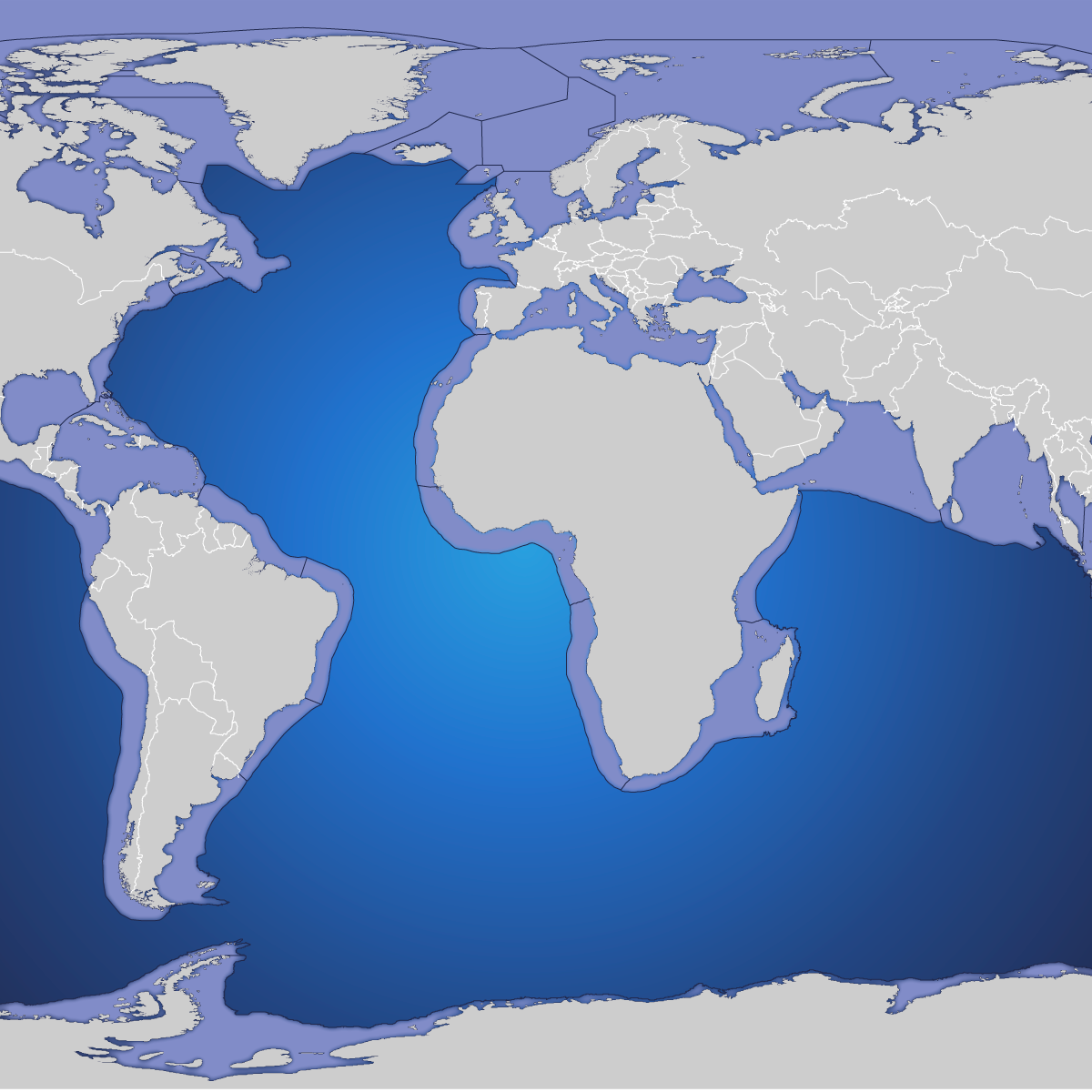
Focusing on the Large Marine Ecosystems (LMEs) of the world, this course will introduce the concept and practice of ecosystem-based management. LMEs occupy areas of coastal ocean at least 200 000 km² or greater in size. These coastal waters produce 12.6 trillion USD in ecosystem goods and services annually and are vitally important for billions of people around the globe.
Because LMEs are bounded by ocean features and are globally linked, management of human activities needs to occur in an integrated fashion across political boundaries and economic sectors (e.g. fishing, shipping, energy, tourism, and mining.) This represents a new type of management approached - shifting from single sector-based to multi-sector assessment and management within the spatial domain of the world's 66 Large Marine Ecosystems. There is global high-level support for this new approach and in this course, we will introduce the concepts and tools for assessing and managing LMEs.
Together, leaders and experts in a global movement to recover and sustain the goods and services of LMEs will introduce you to the mechanisms used for assessment (Transboundary Diagnostic Analysis), planning and implementation (Strategic Action Programme). Based on recent activities in implementation and practice of the LME approach in 22 projects around the globe, we will showcase examples of effective management at this scale, and highlight the challenges and issues. By the end of the online course, we hope you will be able to actively use this knowledge to advance sustainable development of the world’s oceans.
The course was created with the support and input of: the Global Environment Facility (GEF), the United Nations Development Program (UNDP), the National Oceanic and Atmospheric Administration (NOAA), UNESCO-IOC and IW:LEARN.
Your dream job is just a tap away — only on the BoostGrad app.

View on Boostgrad App
View on Browser
Continue
Popular Internships and Jobs by Categories
Browse



© 2025 BoostGrad | All rights reserved