
Back to Courses

Social Sciences Courses - Page 2
Showing results 11-20 of 672
Professionalism in an era of change
In this course we aim to provide you with an insight into how recent societal and technological developments have changed the work of professionals in a variety of professional domains and how this in turn affects professionalism. The course highlights core themes, discusses main insights and theories, raises questions and presents cases, and links insights to practical challenges in various professional domains. It provides a state of the art assessment of professionalism in transition, by looking back and looking forward. It supports target audiences in dealing with professional services and professionals.
The programme has an interdisciplinary approach and will focus on different levels:
At macro level the course presents a historical and sociological view on past and future changes in professions, focused on:
• how do professional fields develop?
• how is professionalism promoted and encouraged among professionals?
• how do professional fields control and empower their members?
At meso level the course presents an organisational view on changes within professional partnerships and institutions, focused on the following questions:
• how do norms and routines affect professionals and professional work?
• how do professionals organise and lead professional work?
At micro level a psychological perspective on changing work and a changing work environment of professionals is presented. This part focuses on the following questions:
• how do professionals deal with work pressure and remain motivated?
• which competencies do professionals require to be able and capable to deliver?
We invite you to join us and increase your understanding of the topics addressed in this course through lectures, interviews, animations, readings and peer interaction.
Chemerinsky on Constitutional Law - The Structure of Government
This course will highlight the construction and interpretation of the U.S. Constitution through the centuries. You'll learn the history behind the Constitution, cases that formed important precedent, and how changes in interpretation have been dependent on shifts in cultural and political climate as well as the composition of the Supreme Court.
We'll start with an overview of the Constitution where we'll consider questions such as "Why the Constitution?" and "What function does the Constitution serve?" Next we'll examine how the Constitution and its subsequent interpretation established the powers of the federal, legislative, and judicial branches of government and allocated powers to the states.
Join me as we look at the questions both raised and answered by the Constitution and those that interpret it!
By the end of this course, you should be able to:
- Describe how the structure of the United States government has been shaped by both the text of the Constitution and by subsequent interpretation and practice of political actors in all branches of government
- Illustrate compromises found in the Constitution by citing examples and historic background
- Articulate the importance of key cases such as Marbury v. Madison, McCullough v. Maryland, and Lochner v. New York
- Explain how the outcome of cases is often dependent upon the current cultural and political climate as well as the composition of the court by citing particular cases and important shifts in the court's jurisprudence
- Assess the relative suitability of various approaches to constitutional interpretation and analysis
Creating Interactive Learning Videos with Edpuzzle
By the end of this project, you will be ready to use Edpuzzle to make video learning content more interactive to improve student learning. Technology plays an ever-increasing role in education, both in the classroom and when moving to online learning. With Edpuzzle, you will begin with videos they have created or found on YouTube, Khan Academy, and other websites. You can then adjust the length, add your own narration, and add comprehension checks to ensure that your videos are not just being watched - they are effective instructional tools. If you are looking for ways to improve your flipped classroom, hybrid learning, or online learning environment, Edpuzzle is an essential tool to add to your Teacher’s Toolkit.
*You will need a free Edpuzzle account for this project.
Nuts and Bolts of U.S. Immigration Law
This course begins by exploring short term entry and long term entry into the United States. We will cover the various means of short term entry and long term entry, as well as the general application processes. We will also examine exclusion and deportation in the United States. In particular, we will discuss how and why individuals may not be admitted into the United States and possible reasons for deportation or removal. Lastly, we will cover the process of how to become a United States citizen and the various requirements for naturalization.
Financial Markets
An overview of the ideas, methods, and institutions that permit human society to manage risks and foster enterprise. Emphasis on financially-savvy leadership skills. Description of practices today and analysis of prospects for the future. Introduction to risk management and behavioral finance principles to understand the real-world functioning of securities, insurance, and banking industries. The ultimate goal of this course is using such industries effectively and towards a better society.
Training and Learning Programs for Volunteer Community Health Workers
Volunteer community health workers (CHWs) are a major strategy for increasing access to and coverage of basic health interventions. Our village health worker training course reviews the process of training and continuing education of CHWs as an important component of involving communities in their own health service delivery. Participants will be guided through the steps of planning training and continuing education activities for village volunteers. The course draws on real-life examples from community-directed onchocerciasis control, village health worker programs, community case management efforts, peer educators programs and patent medicine vendor training programs, to name a few.
Mastering Remote Work and Online Study in U.S. in the post-COVID Era
Are you ready for the new, COVID-forced, online learning paradigm? This competency-based, skill-building course will help non-U.S. students, first-generation immigrants, and foreign-born professionals better understand and master American online learning, as well as other U.S. virtual environments, for college and career success. In the post-COVID era, the course can also be very instrumental in assisting U.S.-based institutions in organizing remote learning activities for their current or prospective international students.
The current pandemic has disrupted the world of higher education and work as we know it. Many thousands of international students and professionals can no longer travel internationally at will and must now learn how to effectively study and work remotely. To excel in American online learning and work environments, international students and foreign-born professionals need to know how American universities and companies use the Internet to organize study and work, develop and execute projects, communicate ideas, collaborate, and solve organizational and technical problems. By taking this course, you will learn how to enhance your cultural knowledge and assess potential skill gaps that may hinder your online experience or negatively impact your performance in U.S. virtual learning and work environments. Throughout the course you will systematically review competencies required for online work, come to better understand common barriers for non-native students and professionals, learn how to detect and overcome competency gaps, and develop plans for self-improvement and success. We believe that you will find the course useful and gain new knowledge and skills to become more successful in your remote study/work in the U.S.
The course was previously offered as iMOOC101 and iMOOC102 "Mastering American e-Learning". We have updated it to reflect the new realities of the Post (well, not yet!)-COVID era. We will be glad if you could share your own experiences in navigating the new world of remote teaching, learning, and work.
Digital business - Grow on digital world
Digital-driven changes are both generic and specific. Most transformations apply to all industries, equally and without exception. But in some industries or places, digital transformations are singular and atypical. To be a player in the digital world, you will need to master both the transformations common to all industries and the transformations at work on certain verticals. Retail and the sharing economy are emblematic of markets where specific transformations are unfolding. This module will tell you how.
Week 1 : New business models, new perimeters
Week 2 : Regulating the digital innovation
Week 3 : The value of digital innovation
Human Predicament Complex Modeling
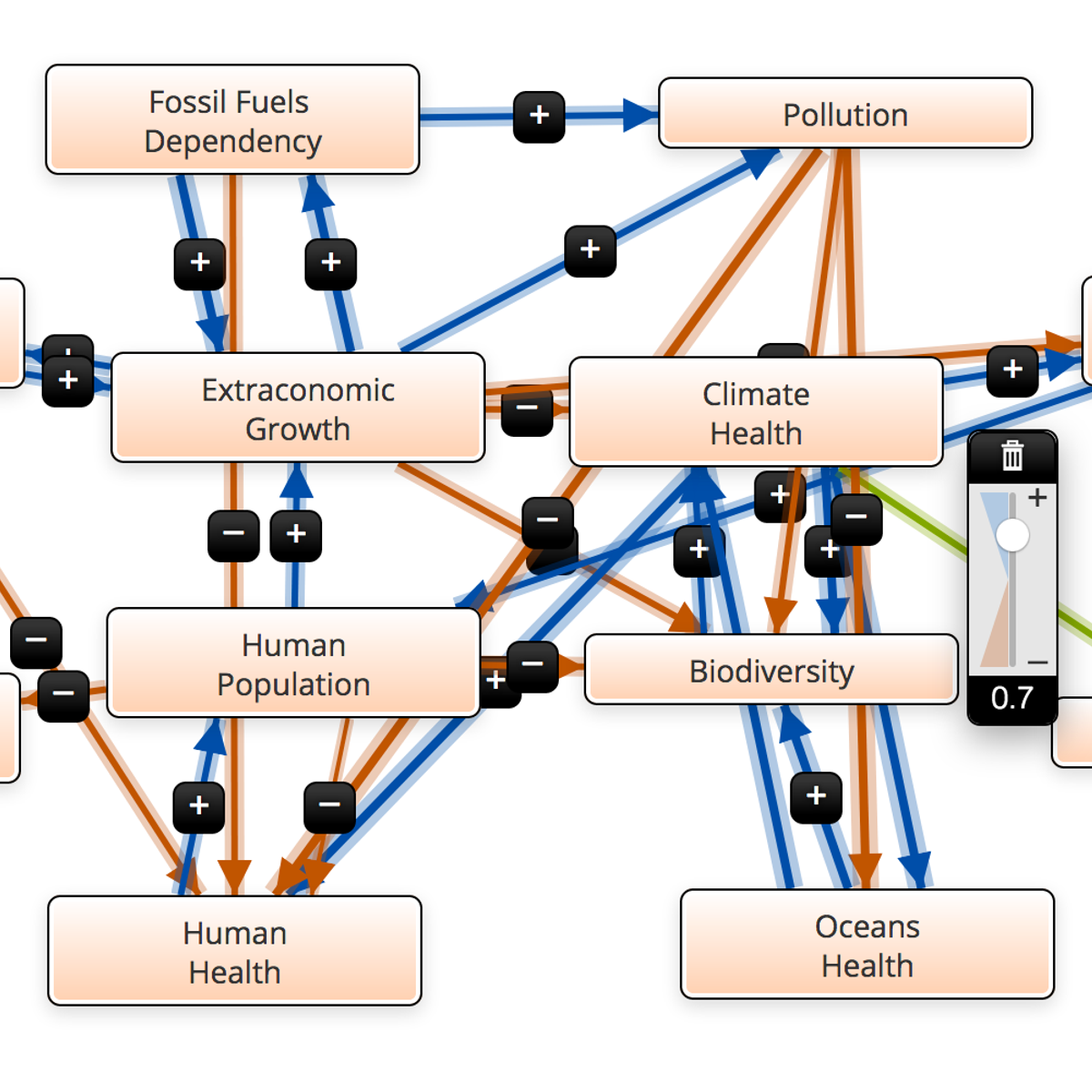
The convergence of different crises pressuring the world today is probably one of the most complex human-made phenomena we can observe. From biodiversity loss to the threat to democracy, all of these crises are deeply intertwined. Therefore, tools from the complexity and systems-thinking toolsets become very relevant for anyone seeking to have a slight grasp of what is going on and what is probably going to happen. This project is about using two of these tools to have a minimal understanding of how all of these crises are interconnected and to simulate possible future scenarios.
The aforementioned tools are Loopy and Mental Modeler, which combine provide a insightful framework for the study of the current Human Predicament and other highly complex situations. Moreover, in this project you will have the opportunity to participate in an experiment that tries to touch on the collective intelligence permeating us all in order to have a better understanding of our current situation - and maybe find more suitable paths. Are you ready?
Note: This project works best for learners who are based in the North America region. We’re currently working on providing the same experience in other regions.
(Non) Status quo Attitudes with NetLogo
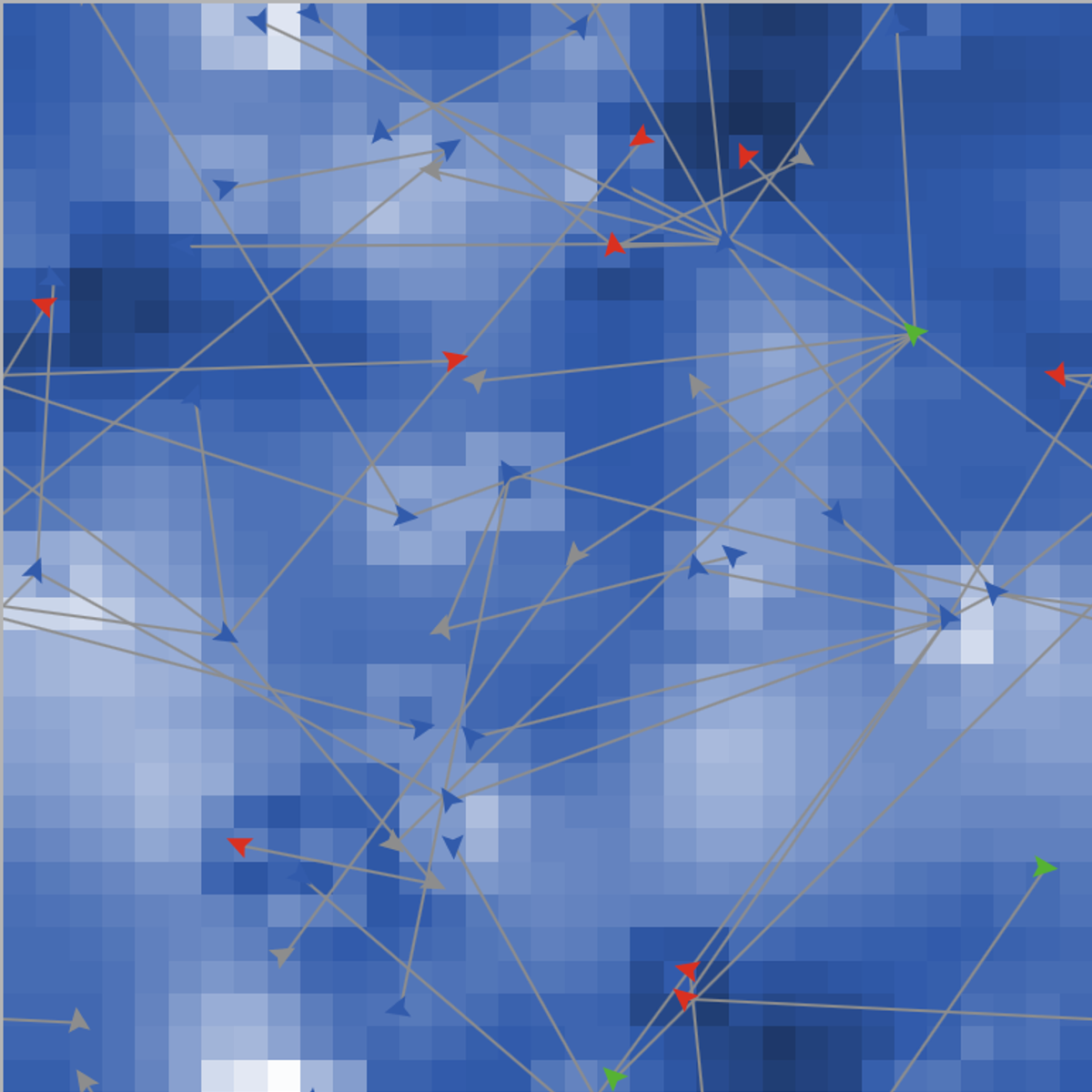
Have you ever wondered what is behind different cultural traits and attitudes towards the status quo? Or more broadly, what influences the Zeitgeist of a society? Generally speaking, when it comes to changing (or not) the current spirit and state of affairs of a given society or community, some people show themselves as idealists, and they can even inspire others. At the same time, some other people are traditionalists, and some are just neutral about how things are. In this guided-project you will develop an agent-based model using NetLogo that tries to use these personas to touch and generate insights around theses questions. And while doing so, you will gain some hands-on knowledge on model building and debugging.
Note: This project works best for learners who are based in the North America region. We’re currently working on providing the same experience in other regions.
Your dream job is just a tap away — only on the BoostGrad app.

View on Boostgrad App
View on Browser
Continue
Popular Internships and Jobs by Categories
Browse



© 2025 BoostGrad | All rights reserved