
Back to Courses



Social Sciences Courses - Page 4
Showing results 31-40 of 672
Financing Infrastructure in African Cities
The world is urbanizing fast. In less than a century more than 1 billion people have been urbanized. That translates into the fact that more than half of the world’s population is already living in cities. Experts forecast that very soon Africa will become one of the most urbanized continents. However, almost 70% of world’s urban population is living in the cities where governments are struggling to provide basic services like sanitation, schools, hospitals, and adequate clean water.
The reason is that, their governments do not have enough money. This may also be true also for the city where you live or work. Poor infrastructure affects your daily life. Local governments struggle with mobilizing finances so that they can improve your quality of life but many times they are not aware of the right mechanisms.
Imagine that your government wants to know how can they finance cities and they want you to advise – where will you begin with? Our finance experts are bringing their experience right at your Desk through this MOOC. This MOOC has five modules and in five weeks you will learn:
• Financial decision making environment in urban systems
• Mechanisms for mobilizing local revenues
• Innovative mechanisms for financing infrastructure projects through partnerships, and
• Financial decision making under uncertainties and risks
We will provide you a carefully selected set of literature, quizzes and interactive discussion forums. So join our MOOC and find out the ways to make your city a better place to live in for yourself and for your next generations.
(This MOOC was developed in collaboration with the United Cities and Local Governments of Africa (UCLG-Africa), African Local Governments Academy (ALGA), and Erasmus University Rotterdam)
Building Scratch and Read Activities with Seesaw
By the end of this project, you will have taken your Seesaw skills to the next level. This project is meant for those who have already started to use Seesaw with their students and are looking for ways to enhance student learning through Seesaw Activities. If you are looking for ways to engage your tech-savvy students, regardless of their age, Seesaw is a wonderful tool to use. As we learn together, you will create a Scratch and Read activity template in Microsoft PowerPoint that can be customized to use with your students right away as a Seesaw Activity.
African cities : An Introduction to Urban Planning
This course teached the basics of urban planning in Africa through technical, environmental, social and economical dimensions.
It focuses on African cities only. Although, they exemplify well cities in the Global South, and potentially all cities, we will make the African context highly topical.
The course is provided by the Urban and Regional community at the Swiss Federal Insitute of Technology in Lausanne (EPFL). More information can be found here https://ceat.epfl.ch/
Attracting and Sourcing Diverse Candidates
It is during the shortlisting and interviewing processes, which are typically undertaken by a single panel, that candidates most often report being unfairly assessed during recruitment efforts. In this situation, it is often revealed that personal characteristics, such as age, gender, or race, rather than relevant characteristics, such as skills and experience, fed into a particular decision about who to hire.
In this module, you will learn how unconscious bias can affect the shortlisting and interview processes. You will become familiar with various practical strategies and techniques to forward a fair and merit-based assessment of all candidates.
This course represents 'Part 2' of the two-part Diversity and Inclusion Recruitment Strategy series offered by the University of Western Australia. It is also one of four that comprise the Recruiting for Diversity and Inclusion Specialization.
Complete all four courses to gain an in-depth understanding of this fascinating and important topic.
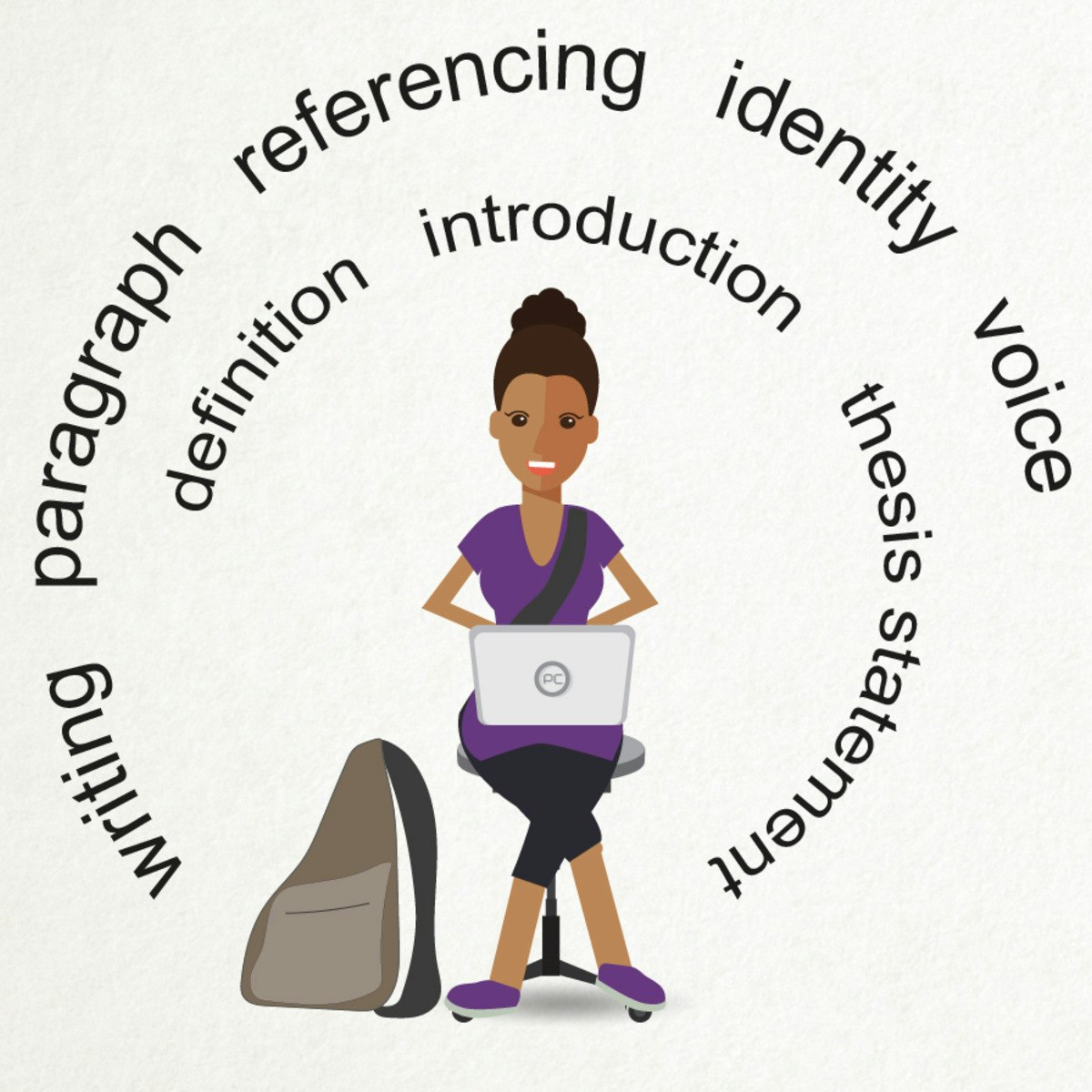
Writing your World: Finding yourself in the academic space
Throughout the world, writing serves to express, record and even create meaningful moments. In academic spaces, writing becomes the bridge between ourselves and the world of ideas. In this course, we provide practical insights into how to write an academic essay. We show you how to develop the academic skills needed to be a competent academic writer. You will have an opportunity to engage with texts written by academics, and to see how some of the ideas in these texts are used by students in constructing an academic essay. We address some of the challenges these students face with respect to academic writing and offer you the opportunity to practice and to develop your own writing style. For this course, we centre our lessons around a specific topic - the concept of identity, since it forms such an important feature of how we locate ourselves in an ever-changing global world. In other words, this course teaches academic writing skills through getting you to write and reflect on your understanding of identity. So if you are thinking about studying at a tertiary institution, or if you just want to brush up on your academic essay writing skills, this course is for you!
Air Pollution – a Global Threat to our Health
We all have to breathe to live. But the air we breathe is polluted both outdoors and indoors. Each year, this pollution costs 7 million lives across the globe – and a lot of suffering. 1 in 8 deaths is due to air pollution. This course will provide you with an introduction to the most recent research in the field of health effects of air pollution as well as a broader understanding of sources and spread of air pollution and what we should do about it.
What is air pollution? What are the sources? How and where are we exposed outdoors and indoors? What happens in the body? Which diseases are the result? Who are the most vulnerable? How can we assess the effects of air pollution? And what should we do to reach the Sustainable Development Goal to “substantially reduce the number of deaths and illnesses from hazardous chemicals and air, water and soil pollution”? These are some of the important questions we will address in the course.
During the course you will meet researchers and experts from the University of Copenhagen and the Technical University of Denmark. They work with different aspects of air pollution and health: toxicology, exposure assessment, epidemiology, engineering and health impact assessment. It is a global responsibility to combat the health impacts of air pollution, and this fight can only be won through new knowledge and global collaboration.
We hope you will join us in the course and equip yourself to take part in this global and individual health challenge.
Computational Thinking for K-12 Educators: Nested If Statements and Compound Conditionals
How could you program a complex "choose your own adventure" game? How can your soccer game determine goals, balls out of bounds, and corner kicks? You'll learn to do both of these in this course!
This class teaches the concepts of nested if/else statements and compound Boolean conditional expressions. For each concept, we'll start by helping you connect real-world experiences you are already familiar with to the programming concept you are about to learn. Next, through a cognitively scaffolded process we'll engage you in developing your fluency with problem solving with nested if/else statements and compound conditionals in a way that keeps frustration at a minimum.
Along the way you will learn about the common challenges or "bugs" students have with these concepts as well as ways to help them find and fix those concepts. You'll also be guided in running classroom discussions to help students develop deeper understanding of these concepts.
Finally, you'll prepare classroom resources to help your students to develop debugging skills. Additionally, you will create resources to help educate your students about the impacts of lack of equity in K-12 CS instruction.
Accessibility to the Scenic Arts
Is your show accessible?
When we ask about accessibility to shows, most people think about access for wheel chairs: the sitting arrangements and where their WC is accessible.
When we ask for more details, people usually think about producing a show where persons with disabilities are performing, for example producing a show where there is some dancing with people on wheel chairs.
Accessiblity for us is a comprehensive concept that goes from purchasing a ticket through an accessible website to catching the bus back home after the performance on accessible public transport. Accessible webs, accessible web content, accessible transport, subtitling, audio description... the possiblities are endless.
Why is this course useful?
To make the venue and the production accessible to all citizens, and specially to persons with disablities. The course will go through the many accessible services you can offer, and how to implement them in your venue or your production. The final aim is to mainstream accessibility so all people have equal access to culture.
Speaking and Presenting: Pitches and Persuasion
The hope good presenters project when pitching their ideas is not naïve hope. They’re not Pollyanna at the podium. Instead, the solutions they offer are supported by research, data, and expertise. This course will teach you how to merge hard facts with an imaginative vision in a way that at once resonates with and inspires your audience.
Queering Identities: LGBTQ+ Sexuality and Gender Identity
In this course, you will explore the history of LGBTQ identities, experiences, and activism. We’ll study major events in global LGBTQ history, investigate local histories of queer and transgender people and communities, and consider how LGBTQ histories have helped shape broader conversations about civil rights, equality, and justice.
Your dream job is just a tap away — only on the BoostGrad app.

View on Boostgrad App
View on Browser
Continue
Popular Internships and Jobs by Categories
Browse



© 2025 BoostGrad | All rights reserved