
Back to Courses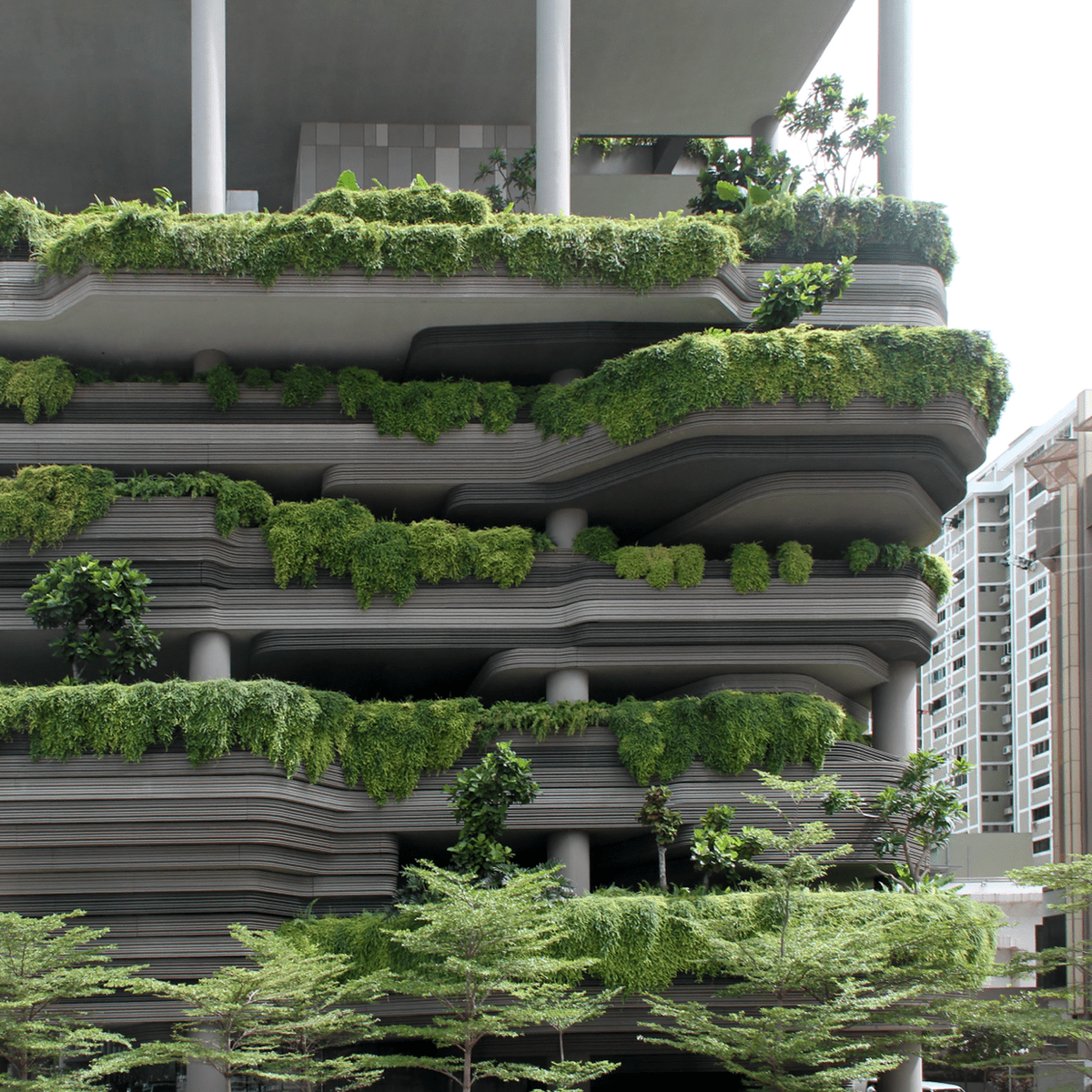




Physical Science And Engineering Courses - Page 3
Showing results 21-30 of 522
Sustainable Transportation Networks and Streetscapes
This course will evaluate best practices in transportation networks, thoroughfares, and streetscape designs for the effective movement of people, goods, and services in a region. Sustainable public and private streetscape design and application will be reviewed and evaluated for applications for sustainable cities. Considerations are assessed for smart urban planning, growth, and lifestyle. Strategies for creating equitable, healthy, and sustainable communities are also evaluated.
By the end of this course, you will be able to:
1. Survey and evaluate thoroughfare network considerations for connectivity, block size and sidewalk interaction.
2. Compare different complete street design options for application in smart growth planning.
3. Evaluate sidewalk design and planning strategies for public and private sidewalks to include street tree configurations and street light design.
4. Examine issues of water management with specialized curb design, ground water recharge areas and swales as part of the streetscape design and planning.
5. Identify and evaluate the differences between free-flow, slow-flow, and yield-flow thoroughfare design concepts.
6. Assess and evaluate smart urban planning, growth, and lifestyle indicators.
The target audience for this course includes:
- Government Officials involved planning, designing, monitoring, enforcement, and assessment of sustainable project developments at the local, state, and federal level.
- Private sector companies in the transportation and municipal design and construction business
- Architects interested in advancing sustainable concepts for cities and communities
- Foundations, associations, and other NGOs that support smart growth strategies
- Academic faculty and students studying and researching community sustainability and resilience
- Private citizens interested in improving their communities and living conditions
Large Marine Ecosystems: Assessment and Management
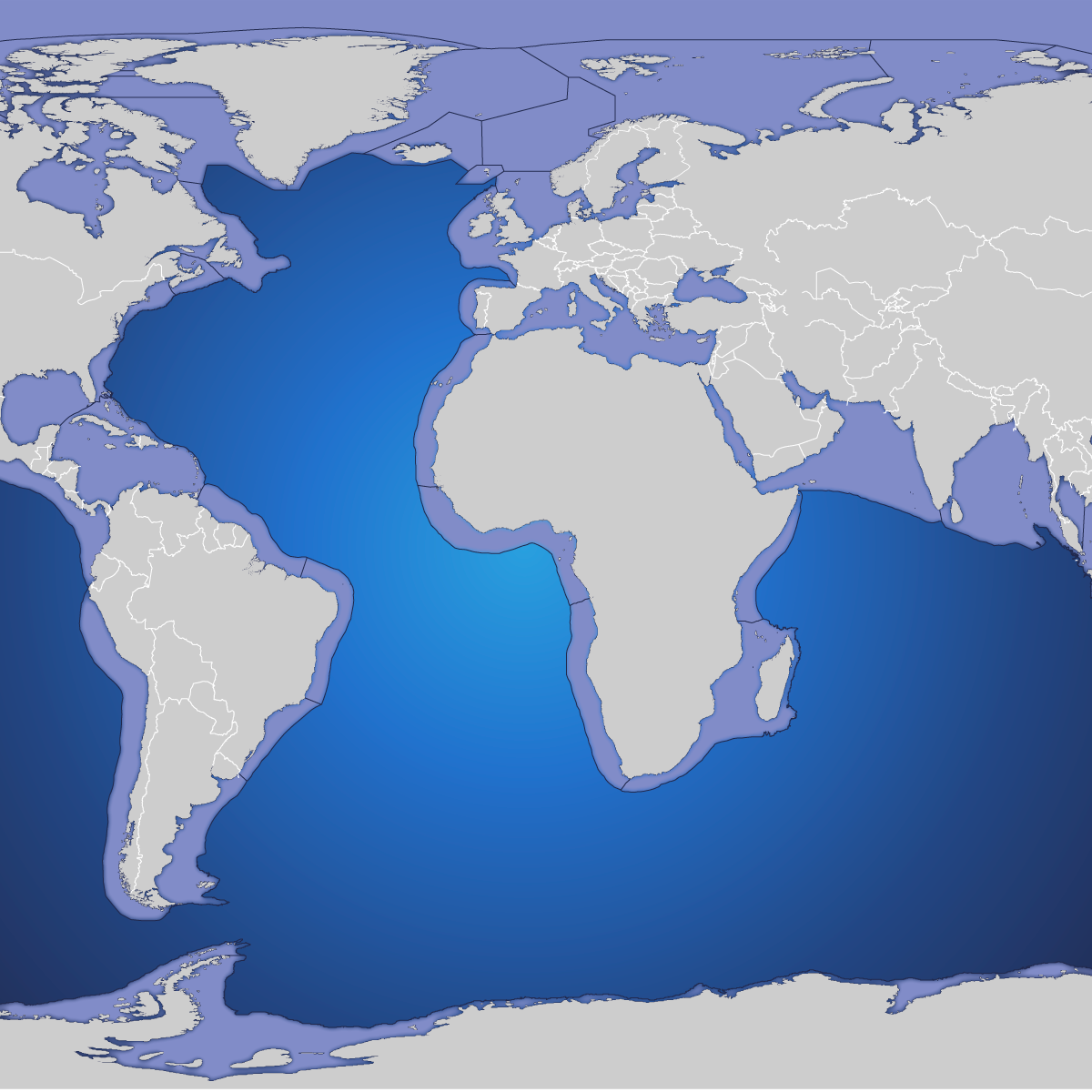
Focusing on the Large Marine Ecosystems (LMEs) of the world, this course will introduce the concept and practice of ecosystem-based management. LMEs occupy areas of coastal ocean at least 200 000 km² or greater in size. These coastal waters produce 12.6 trillion USD in ecosystem goods and services annually and are vitally important for billions of people around the globe.
Because LMEs are bounded by ocean features and are globally linked, management of human activities needs to occur in an integrated fashion across political boundaries and economic sectors (e.g. fishing, shipping, energy, tourism, and mining.) This represents a new type of management approached - shifting from single sector-based to multi-sector assessment and management within the spatial domain of the world's 66 Large Marine Ecosystems. There is global high-level support for this new approach and in this course, we will introduce the concepts and tools for assessing and managing LMEs.
Together, leaders and experts in a global movement to recover and sustain the goods and services of LMEs will introduce you to the mechanisms used for assessment (Transboundary Diagnostic Analysis), planning and implementation (Strategic Action Programme). Based on recent activities in implementation and practice of the LME approach in 22 projects around the globe, we will showcase examples of effective management at this scale, and highlight the challenges and issues. By the end of the online course, we hope you will be able to actively use this knowledge to advance sustainable development of the world’s oceans.
The course was created with the support and input of: the Global Environment Facility (GEF), the United Nations Development Program (UNDP), the National Oceanic and Atmospheric Administration (NOAA), UNESCO-IOC and IW:LEARN.
Nanotechnology: A Maker’s Course
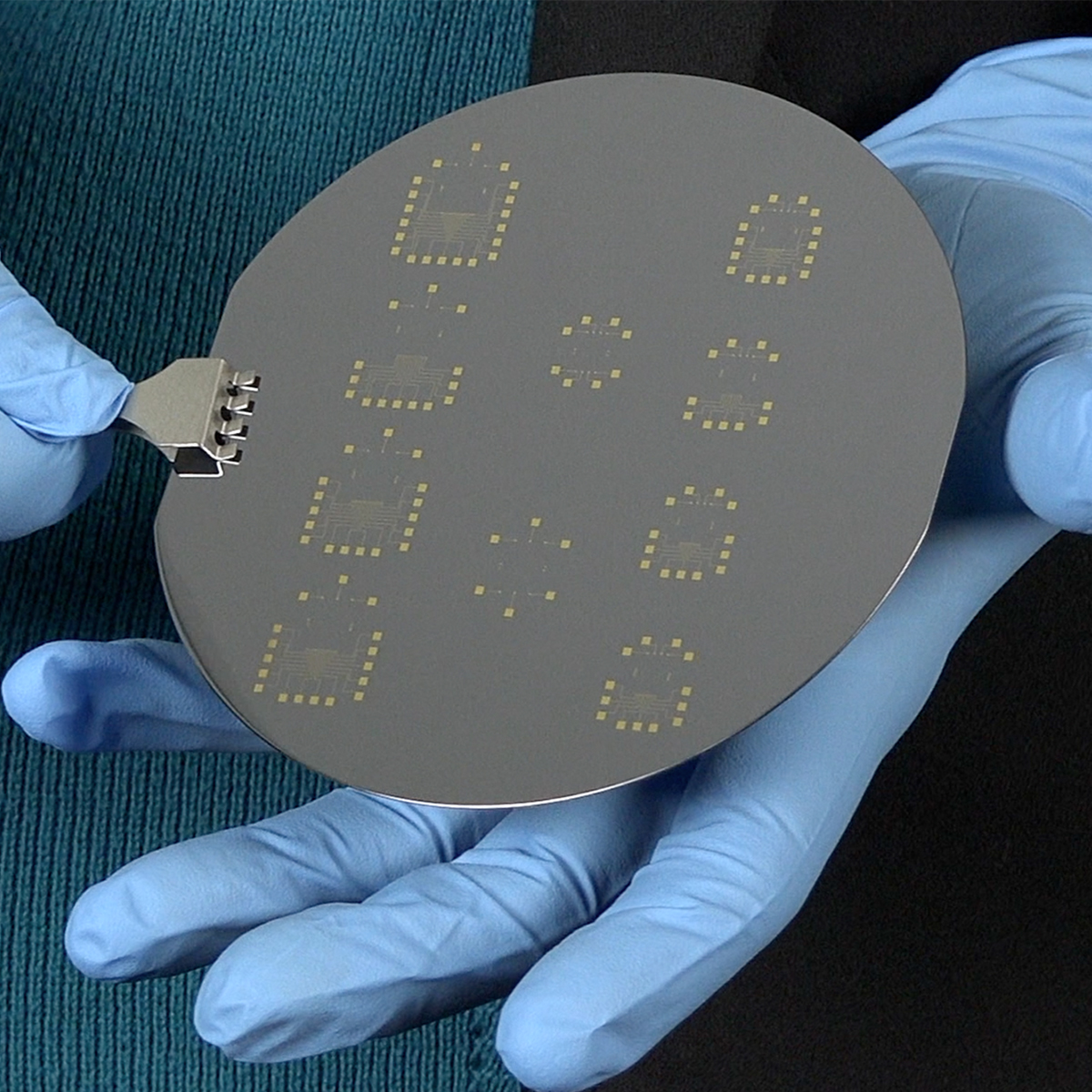
How can we create nano-structures that are 10,000 times smaller than the diameter of a human hair? How can we “see” at the nano-scale? Through instruction and lab demonstrations, in this course you will obtain a rich understanding of the capabilities of nanotechnology tools, and how to use this equipment for nano-scale fabrication and characterization. The nanoscale is the next frontier of the Maker culture, where designs become reality. To become a Nanotechnology Maker pioneer, we will introduce you to the practical knowledge, skills, and tools that can turn your nanotechnology ideas into physical form and that enable you to image objects at the nano-scale.
This course has been developed by faculty and staff experts in nano-fabrication, electron beam microscopy, and nano-characterization through the Research Triangle Nanotechnology Network (RTNN). The RTNN offers training and use of the tools demonstrated in this course to schools and industry through the United States National Nanotechnology Coordinated Infrastructure program. The tools demonstrated in this course are available to the public through the RTNN.
Digital Systems: From Logic Gates to Processors
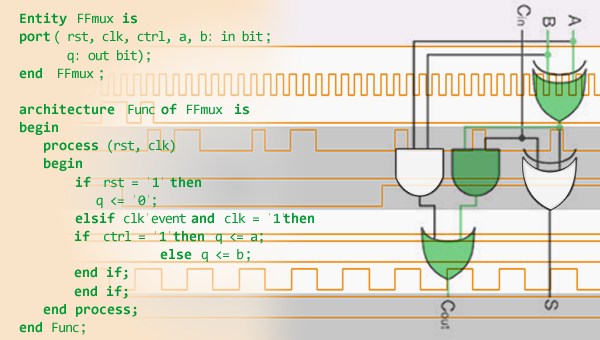
This course gives you a complete insight into the modern design of digital systems fundamentals from an eminently practical point of view. Unlike other more "classic" digital circuits courses, our interest focuses more on the system than on the electronics that support it. This approach will allow us to lay the foundation for the design of complex digital systems.
You will learn a set of design methodologies and will use a set of (educational-oriented) computer-aided-design tools (CAD) that will allow you not only to design small and medium size circuits, but also to access to higher level courses covering so exciting topics as application specific integrated circuits (ASICs) design or computer architecture, to give just two examples.
Course topics are complemented with the design of a simple processor, introduced as a transversal example of a complex digital system. This example will let you understand and feel comfortable with some fundamental computer architecture terms as the instruction set, microprograms and microinstructions.
After completing this course you will be able to:
* Design medium complexity digital systems.
* Understand the description of digital systems using high-level languages such as VHDL.
* Understand how computers operate at their most basic level (machine language).
Climate Change and Water in Mountains: A Global Concern
What is climate change ? How are mountain regions affected by the evolution of water resources and their uses ? What kind of risks need to be considered ?
Mountains are recognized as particularly sensitive physical environments where intense and rapid changes have in the past, and may increasingly in the future, place pressure on their resource base.
In this context, a team of roughly 100 experts worked from 2008 to 2013 for the European ACQWA project (www.acqwa.ch) which was coordinated by the University of Geneva. The primary objectives of the project were to assess the impacts of a changing climate on the quantity and quality of water originating in mountain regions, particularly where snow- and ice melt represent a large, sometimes the largest, streamflow component. A further objective of the project was to determine the potential disruptions to water-dependent economic activities related to the climate impacts on hydrological systems, and to propose a portfolio of possible adaptation strategies.
This particular MOOC is inspired by the ACQWA Project and offers a better understanding of climate change, its impacts on the quality and quantity of water in mountain regions and the risks related to changing water resources. From an interdisciplinary perspective, the participation of twenty-five instructors from five different countries (Switzerland, England, South Korea, India and Nepal) and fourteen institutions (UNIGE, RTS, UNIFR, UZH, ETHZ, Meteodat GmbH, WGMS, Imperial College London, Agroscope, République et Canton de Genève, Yonsei University, IHCAP, ICIMOD, SDC, FOEN) highlights the diversity of both theoretical and practical viewpoints related to these issues.
By the end of this course, you will be able :
- to define the general concept of climate change in mountain regions
- to understand the concepts associated with climate change such as adaptation and water governance strategies
- to consider the impacts of climate change on water resources in mountain regions
- to identify the impacts of climate change on hydropower, agriculture, aquatic ecosystems and health
- to enumerate risks that can occur in mountain areas and lead to disruptions in water availability and use.
Your acquired knowledge will be evaluated through multiple-choice quizzes at the end of each unit of the course.
This MOOC on “Climate Change and Water in Mountain Regions : A Global Concern” was initiated and financed by the University of Geneva, through its Institute for Environmental Sciences.
We look forward to you joining us !
Hardware Description Languages for FPGA Design
This course can also be taken for academic credit as ECEA 5361, part of CU Boulder’s Master of Science in Electrical Engineering degree.
Hardware Description Languages for Logic Design enables students to design circuits using VHDL and Verilog, the most widespread design methods for FPGA Design. It uses natural learning processes to make learning the languages easy. Simple first examples are presented, then language rules and syntax, followed by more complex examples, and then finally use of test bench simulations to verify correctness of the designs. Lecture presentations are reinforced by many programming example problems so that skill in the languages is obtained. After completing this course, each student will have fundamental proficiency in both languages, and more importantly enough knowledge to continue learning and gaining expertise in Verilog and VHDL on their own.
A Business Approach to Sustainable Landscape Restoration
Integrated landscape management and large-scale landscape restoration should be in every company’s business strategy because in order to reach the Sustainable Development Goal on Land Degradation Neutrality (SDG Number 15.3) scaling up and acceleration of business-driven landscape restoration is urgently needed.
This requires business professionals with a vision, the right knowledge and skills. This MOOC aims to train the next generation of business professionals and developers to acknowledge business’ interdependency with healthy landscapes and understand the value of ecosystem resources.
“Historically, we have found countless ways to justify our continued exploitation of the environment: discovery, tradition, Manifest Destiny, even Chinese hoax. But we’re all out of excuses now. Each passing day swells the data on greenhouse gases and extreme weather, shrinking reservoirs and rising sea levels, and diminishing biodiversity. Our resources are finite, the window for change if not firmly shut, is certainly closing, and all life must adapt or be doomed.”
Téa Obreht,
The New Yorker, Dec. 19&26, 2016, p. 106.
It is a frightening prospect indeed – that all life on Earth must either adapt or be doomed. This course is about landscape degradation – a global and wicked problem that is contributing to the dooming prospect of depletion of Earth’s finite resources. But this course is also about the solutions to this problem – business driven landscape restoration.
So rather than leaving you powerless with the prospect Obreht puts fowards above, it is our hope that you learn how you can be part of the solution to making sure that Planet Earth still provides a safe and habitable home for future generations.
We must act big and we must act now.
With this course we want to pass on valuable knowledge and teach you useful skills that you can apply in your professional life that will enable you to tackle the issue of landscape degradation and restoration.
The issue is urgent, so let’s dive right into it.
This MOOC is developed by the ENABLE partnership, which is co-funded by the ERASMUS+ programme of the European Commission and involves a diverse, international group of organizations including Rotterdam School of Management, Erasmus University, Commonland, United Nations University Land Restoration Training Programme, the Spanish National Research Council and Estoril Global Conferences.
Digital Signal Processing 2: Filtering
Digital Signal Processing is the branch of engineering that, in the space of just a few decades, has enabled unprecedented levels of interpersonal communication and of on-demand entertainment. By reworking the principles of electronics, telecommunication and computer science into a unifying paradigm, DSP is a the heart of the digital revolution that brought us CDs, DVDs, MP3 players, mobile phones and countless other devices.
The goal, for students of this course, will be to learn the fundamentals of Digital Signal Processing from the ground up. Starting from the basic definition of a discrete-time signal, we will work our way through Fourier analysis, filter design, sampling, interpolation and quantization to build a DSP toolset complete enough to analyze a practical communication system in detail. Hands-on examples and demonstration will be routinely used to close the gap between theory and practice.
To make the best of this class, it is recommended that you are proficient in basic calculus and linear algebra; several programming examples will be provided in the form of Python notebooks but you can use your favorite programming language to test the algorithms described in the course.
Mountains 101
Mountains 101 is a broad and integrated overview of the mountain world. This 12-lesson course covers an interdisciplinary field of study focusing on the physical, biological, and human dimensions of mountain places in Alberta, Canada, and around the world. Specifically, we'll study the geological origins of mountains, how they’re built-up and worn-down over time; we’ll learn about their importance for biodiversity and water cycles, globally and locally; we’ll explore their cultural significance to societies around the globe, and how that relationship has evolved over time; and we’ll learn how mountains are used, how they’re protected, and how today they’re experiencing rapid change in a warming climate.
At the end of each lesson, Mountains 101 will also provide learners with some smart tricks -- Tech Tips -- to safely enjoy time in the high alpine environment: from how to pick the best footwear for hiking to making smart decisions in avalanche terrain.
We’ll be delivering your online lessons from valley bottoms to mountaintops, from museums and labs, to alpine huts and other spectacular alpine sites, and we’ll do so with the help of a whole host of experts.
We invite you to join us for this online adventure! The mountains are calling...
Applications in Engineering Mechanics
This course applies principles learned in my course “Introduction to Engineering Mechanics” to analyze real world engineering structures. You will need to have mastered the engineering fundamentals from that class in order to be successful in this course offering. This course addresses the modeling and analysis of static equilibrium problems with an emphasis on real world engineering systems and problem solving.
---------------------------
Recommended Background:
You will need to have successfully completed my earlier course “Introduction to Engineering Mechanics” in order to be successful in this course.
---------------------------
The copyright of all content and materials in this course are owned by either the Georgia Tech Research Corporation or Dr. Wayne Whiteman. By participating in the course or using the content or materials, whether in whole or in part, you agree that you may download and use any content and/or material in this course for your own personal, non-commercial use only in a manner consistent with a student of any academic course. Any other use of the content and materials, including use by other academic universities or entities, is prohibited without express written permission of the Georgia Tech Research Corporation. Interested parties may contact Dr. Wayne Whiteman directly for information regarding the procedure to obtain a non-exclusive license.
Your dream job is just a tap away — only on the BoostGrad app.

View on Boostgrad App
View on Browser
Continue
Popular Internships and Jobs by Categories
Browse



© 2025 BoostGrad | All rights reserved