
Back to Courses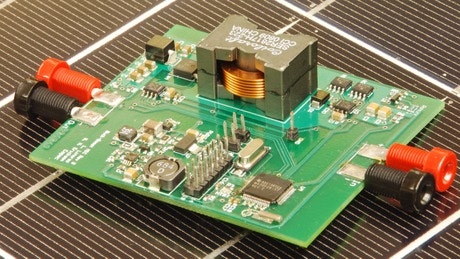


Electrical Engineering Courses
Showing results 1-10 of 141
Introduction to Power Electronics
This course can also be taken for academic credit as ECEA 5700, part of CU Boulder’s Master of Science in Electrical Engineering degree.
This course introduces the basic concepts of switched-mode converter circuits for controlling and converting electrical power with high efficiency. Principles of converter circuit analysis are introduced, and are developed for finding the steady state voltages, current, and efficiency of power converters. Assignments include simulation of a dc-dc converter, analysis of an inverting dc-dc converter, and modeling and efficiency analysis of an electric vehicle system and of a USB power regulator.
After completing this course, you will:
● Understand what a switched-mode converter is and its basic operating principles
● Be able to solve for the steady-state voltages and currents of step-down, step-up, inverting, and other power converters
● Know how to derive an averaged equivalent circuit model and solve for the converter efficiency
A basic understanding of electrical circuit analysis is an assumed prerequisite for this course.
Real-Time Embedded Systems Theory and Analysis
This course can also be taken for academic credit as ECEA 5316, part of CU Boulder’s Master of Science in Electrical Engineering degree.
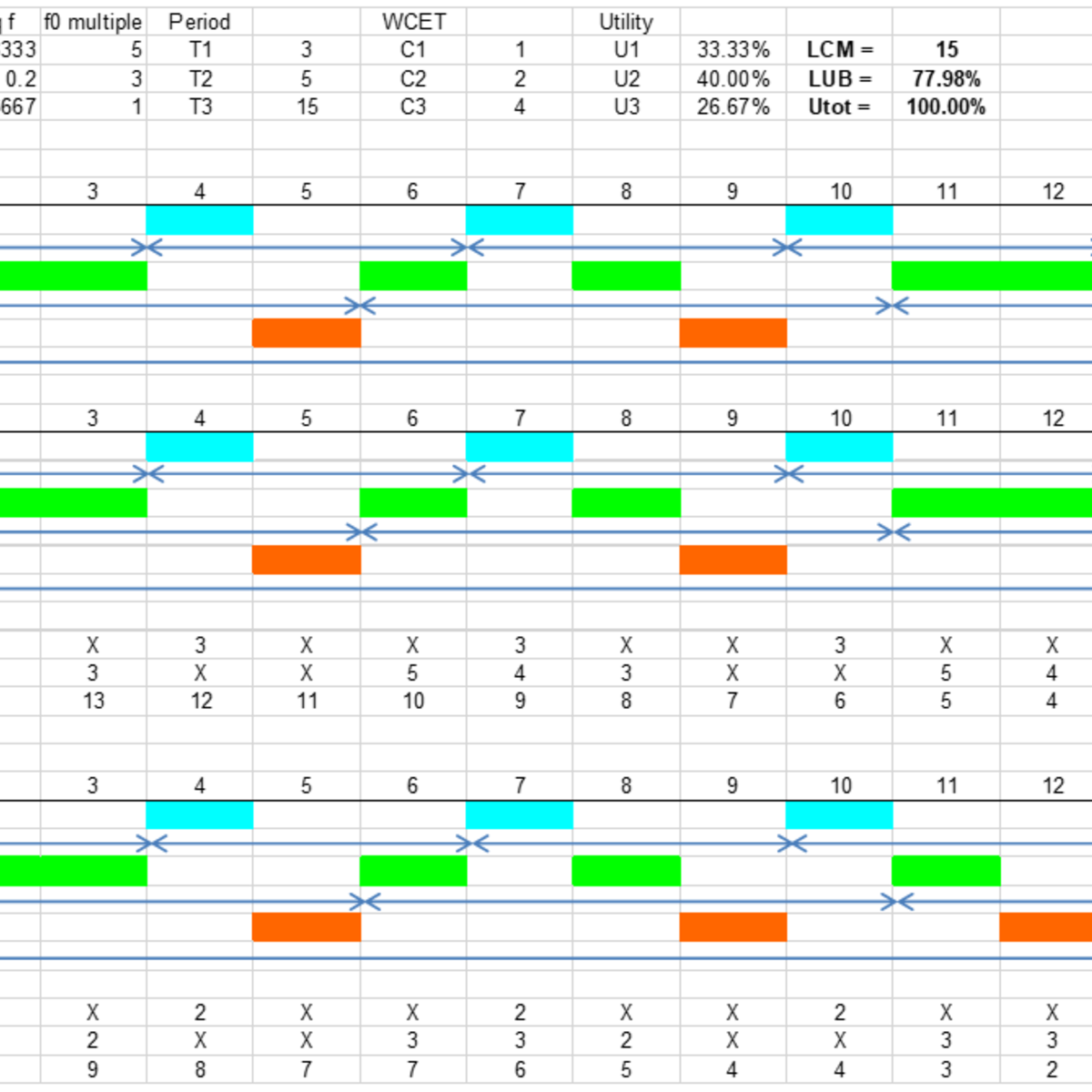
This course provides an in-depth and full mathematical derivation and review of models for scheduling policies and feasibility determination by hand and with rate monotonic tools along with comparison to actual performance for real-time scheduled threads running on a native Linux system. By the end of this course the learner will be able to full derive the fixed priority rate monotonic least upper bound for feasibility as well as justifying the rate monotonic policy and will be able to compare to dynamic priority scheduling including earliest deadline first and least laxity policies.
At the end of this course learners will be able to fully derive and explain the math model for the rate monotonic least upper bound as well as performing timing diagram analysis for fixed and dynamic priority software services. Tools to provide analysis will be learned (Cheddar) to automate timing analysis and to compare to actual performance.
Specific objectives include:
● Rate monotonic theory (complete math models)
● Differences between fixed priority rate monotonic policy and dynamic priority earliest deadline first and least laxity policies
● Scheduling theory and practice writing code for multi-frequency executives, priority preemptive RTOS services, and real-time threaded services on traditional operating systems (Linux)
● Building a simple Linux multi-service system using POSIX real-time extensions on Raspberry Pi 3b using sequencing and methods to log and verify agreement between theory and practice
● Timing diagram generation and analysis using Cheddar
Nanotechnology: A Maker’s Course
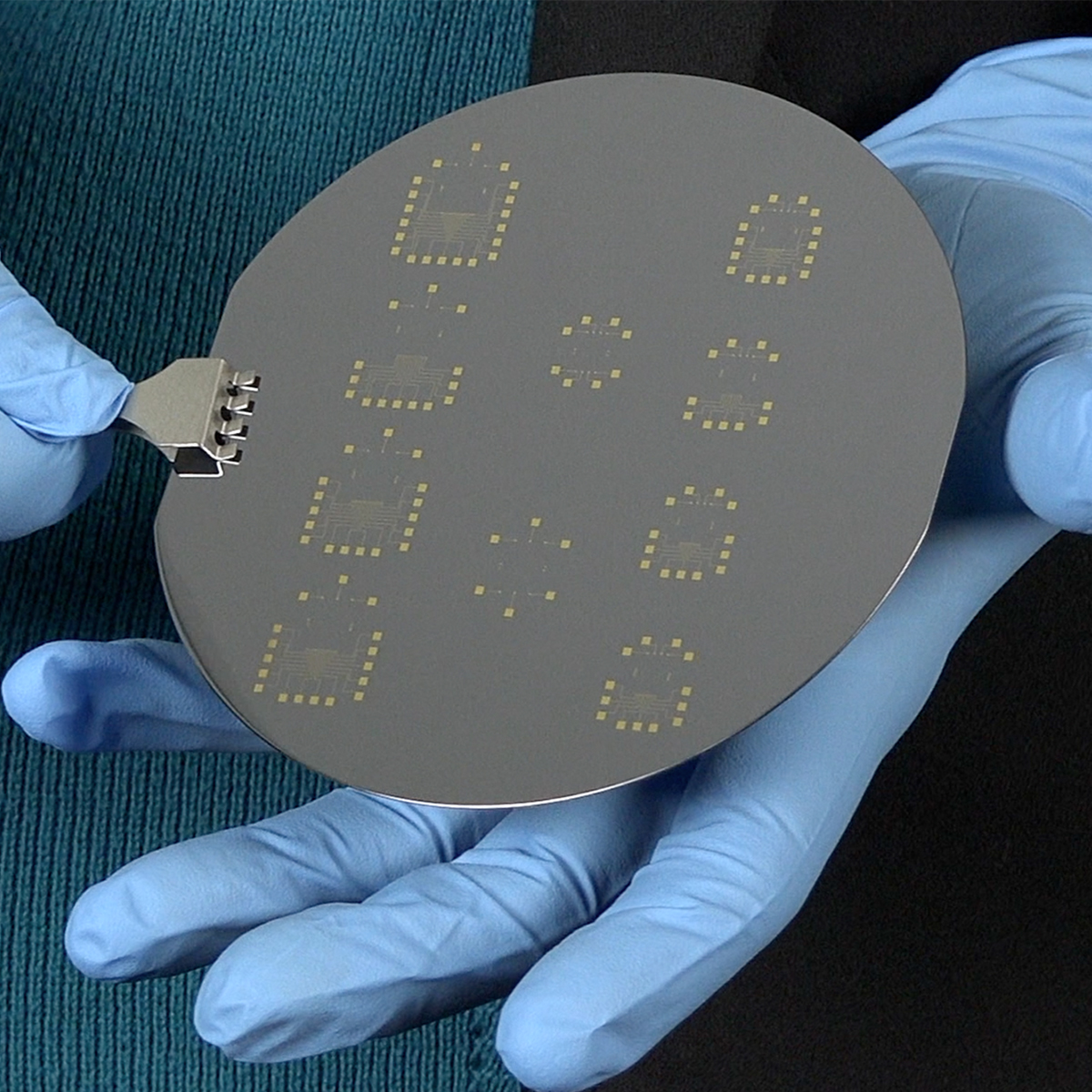
How can we create nano-structures that are 10,000 times smaller than the diameter of a human hair? How can we “see” at the nano-scale? Through instruction and lab demonstrations, in this course you will obtain a rich understanding of the capabilities of nanotechnology tools, and how to use this equipment for nano-scale fabrication and characterization. The nanoscale is the next frontier of the Maker culture, where designs become reality. To become a Nanotechnology Maker pioneer, we will introduce you to the practical knowledge, skills, and tools that can turn your nanotechnology ideas into physical form and that enable you to image objects at the nano-scale.
This course has been developed by faculty and staff experts in nano-fabrication, electron beam microscopy, and nano-characterization through the Research Triangle Nanotechnology Network (RTNN). The RTNN offers training and use of the tools demonstrated in this course to schools and industry through the United States National Nanotechnology Coordinated Infrastructure program. The tools demonstrated in this course are available to the public through the RTNN.
Digital Systems: From Logic Gates to Processors
This course gives you a complete insight into the modern design of digital systems fundamentals from an eminently practical point of view. Unlike other more "classic" digital circuits courses, our interest focuses more on the system than on the electronics that support it. This approach will allow us to lay the foundation for the design of complex digital systems.
You will learn a set of design methodologies and will use a set of (educational-oriented) computer-aided-design tools (CAD) that will allow you not only to design small and medium size circuits, but also to access to higher level courses covering so exciting topics as application specific integrated circuits (ASICs) design or computer architecture, to give just two examples.
Course topics are complemented with the design of a simple processor, introduced as a transversal example of a complex digital system. This example will let you understand and feel comfortable with some fundamental computer architecture terms as the instruction set, microprograms and microinstructions.
After completing this course you will be able to:
* Design medium complexity digital systems.
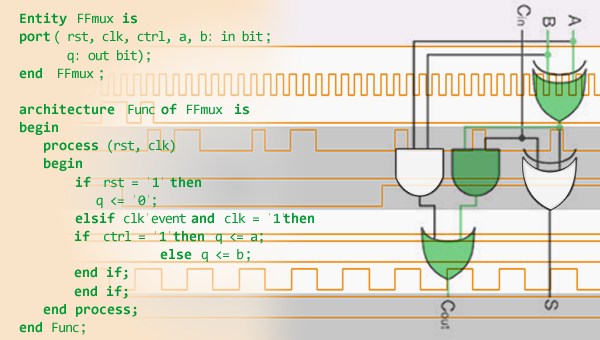
* Understand the description of digital systems using high-level languages such as VHDL.
* Understand how computers operate at their most basic level (machine language).
Hardware Description Languages for FPGA Design
This course can also be taken for academic credit as ECEA 5361, part of CU Boulder’s Master of Science in Electrical Engineering degree.
Hardware Description Languages for Logic Design enables students to design circuits using VHDL and Verilog, the most widespread design methods for FPGA Design. It uses natural learning processes to make learning the languages easy. Simple first examples are presented, then language rules and syntax, followed by more complex examples, and then finally use of test bench simulations to verify correctness of the designs. Lecture presentations are reinforced by many programming example problems so that skill in the languages is obtained. After completing this course, each student will have fundamental proficiency in both languages, and more importantly enough knowledge to continue learning and gaining expertise in Verilog and VHDL on their own.
Digital Signal Processing 2: Filtering
Digital Signal Processing is the branch of engineering that, in the space of just a few decades, has enabled unprecedented levels of interpersonal communication and of on-demand entertainment. By reworking the principles of electronics, telecommunication and computer science into a unifying paradigm, DSP is a the heart of the digital revolution that brought us CDs, DVDs, MP3 players, mobile phones and countless other devices.
The goal, for students of this course, will be to learn the fundamentals of Digital Signal Processing from the ground up. Starting from the basic definition of a discrete-time signal, we will work our way through Fourier analysis, filter design, sampling, interpolation and quantization to build a DSP toolset complete enough to analyze a practical communication system in detail. Hands-on examples and demonstration will be routinely used to close the gap between theory and practice.
To make the best of this class, it is recommended that you are proficient in basic calculus and linear algebra; several programming examples will be provided in the form of Python notebooks but you can use your favorite programming language to test the algorithms described in the course.
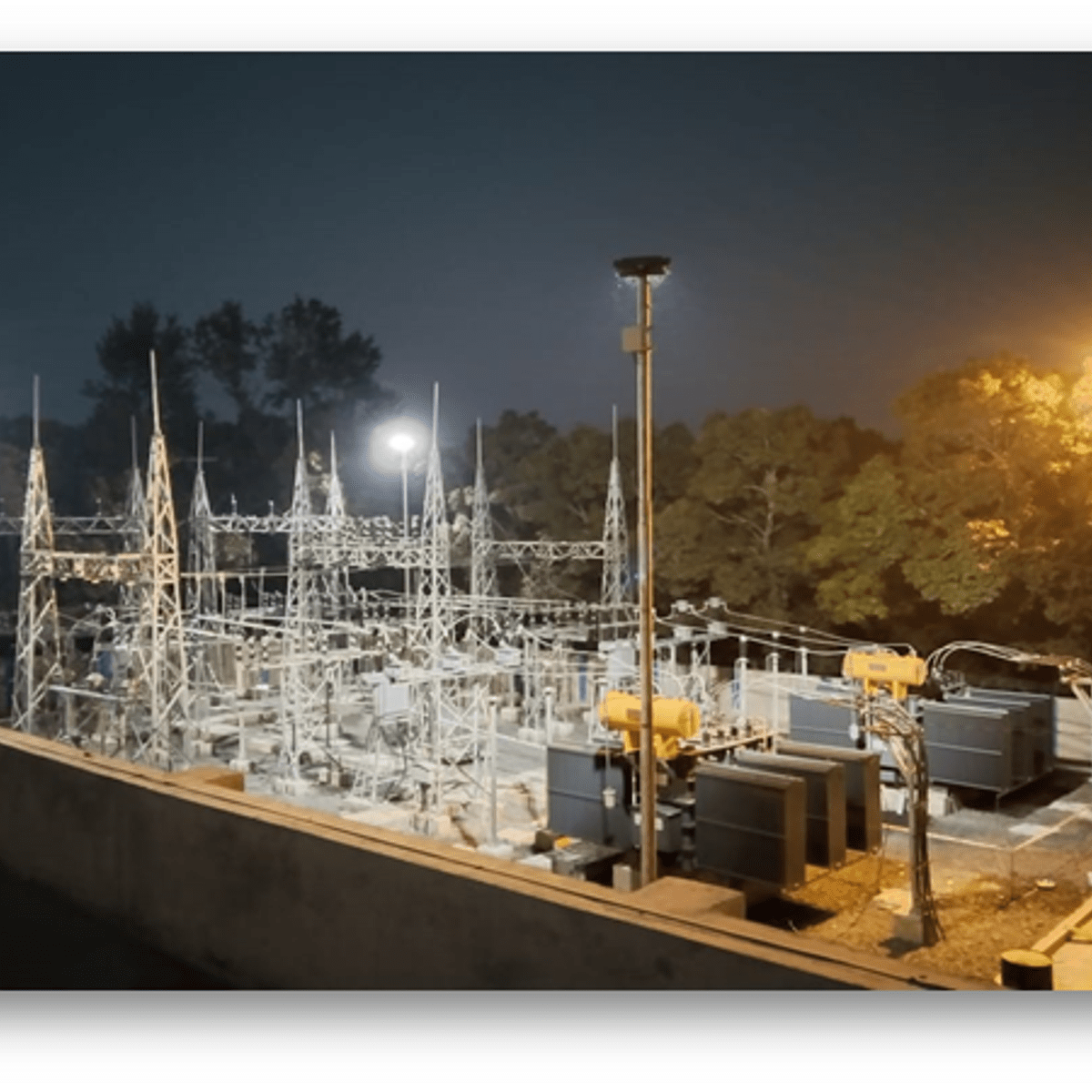
MV Substation - An industrial approach (PART-A)
This tailor-made certificate course on MV Substation Engineering is curated by the Subject Matter Experts and practitioners of L&T, and is structured pragmatically to help the learner understand the industry practices in carrying out the engineering for substations and selection of various substation equipment in accordance with Indian & International Standards. In addition, it covers the electrical safety rules, safe operating procedures and an overview of maintenance practices to give a holistic understanding of the subject.
This course opens up opportunities for the learners to become/excel as a Electrical Design Engineer, Construction and Planning Engineer.
This course gives the learners insights about:
1. Substation, its types and components
2. Substation configuration for different scenarios
3. Transformers, its types and installation
4. Complete knowhow of LV and MV Switchgear and its components
5. Basics of Protection system
6. Station AC/DC Aux Power system
Internet of Things: Sensing and Actuation From Devices
Have you wondered how information from physical devices in the real world gets communicated to Smartphone processors? Do you want to make informed design decisions about sampling frequencies and bit-width requirements for various kinds of sensors? Do you want to gain expertise to affect the real world with actuators such as stepper motors, LEDs and generate notifications?
In this course, you will learn to interface common sensors and actuators to the DragonBoard™ 410c hardware. You will then develop software to acquire sensory data, process the data and actuate stepper motors, LEDs, etc. for use in mobile-enabled products. Along the way, you’ll learn to apply both analog-to-digital and digital-to-analog conversion concepts.
Learning Goals: After completing this course, you will be able to:
1. Estimate sampling frequency and bit-width required for different sensors.
2. Program GPIOs (general purpose input/output pins) to enable communication between the DragonBoard 410c and common sensors.
3. Write data acquisition code for sensors such as passive and active infrared (IR) sensors, microphones, cameras, GPS, accelerometers, ultrasonic sensors, etc.
4. Write applications that process sensor data and take specific actions, such as stepper motors, LED matrices for digital signage and gaming, etc.
Battery Pack Balancing and Power Estimation
This course can also be taken for academic credit as ECEA 5734, part of CU Boulder’s Master of Science in Electrical Engineering degree.
In this course, you will learn how to design balancing systems and to compute remaining energy and available power for a battery pack. By the end of the course, you will be able to:
- Evaluate different design choices for cell balancing and articulate their relative merits
- Design component values for a simple passive balancing circuit
- Use provided Octave/MATLAB simulation tools to evaluate how quickly a battery pack must be balanced
- Compute remaining energy and available power using a simple cell model
- Use provided Octave/MATLAB script to compute available power using a comprehensive equivalent-circuit cell model
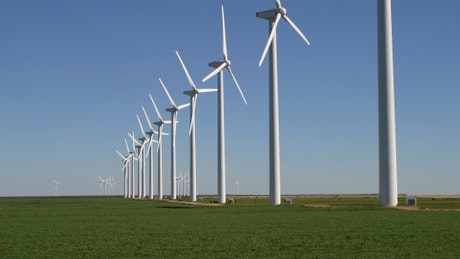
Wind Energy
How tall is a modern wind turbine and how can it possibly generate power from the wind? This course gives an overview of key aspects in wind energy engineering. Whether you are looking for general insight in this green technology or your ambition is to pursue a career in wind energy engineering, 'Wind Energy' is an excellent starting point.
Experts located in the wind pioneering country of Denmark will take you on a tour through the most fundamental disciplines of wind energy research such as wind measurements and resource assessment, aerodynamics, wind turbine technology, structural mechanics, materials, financial and electrical systems.
You will gain a rational understanding of wind energy engineering and, through hands-on exercises, you will learn to perform wind energy calculations based on simple models. Working with the different course disciplines will give you a taste of what wind energy engineering is all about. This allows you to identify the most interesting or relevant aspects of wind energy engineering to be pursued in your future studies or in your professional career.
View our video: https://youtu.be/he4UWTGHxrY
For other professional courses in wind energy engineering, visit our website at www.wem.dtu.dk
Your dream job is just a tap away — only on the BoostGrad app.

View on Boostgrad App
View on Browser
Continue
Popular Internships and Jobs by Categories
Browse



© 2025 BoostGrad | All rights reserved