
Back to Courses



Physical Science And Engineering Courses - Page 2
Showing results 11-20 of 522
Origins - Formation of the Universe, Solar System, Earth and Life
The Origins course tracks the origin of all things – from the Big Bang to the origin of the Solar System and the Earth. The course follows the evolution of life on our planet through deep geological time to present life forms.
Human Predicament Complex Modeling
The convergence of different crises pressuring the world today is probably one of the most complex human-made phenomena we can observe. From biodiversity loss to the threat to democracy, all of these crises are deeply intertwined. Therefore, tools from the complexity and systems-thinking toolsets become very relevant for anyone seeking to have a slight grasp of what is going on and what is probably going to happen. This project is about using two of these tools to have a minimal understanding of how all of these crises are interconnected and to simulate possible future scenarios.
The aforementioned tools are Loopy and Mental Modeler, which combine provide a insightful framework for the study of the current Human Predicament and other highly complex situations. Moreover, in this project you will have the opportunity to participate in an experiment that tries to touch on the collective intelligence permeating us all in order to have a better understanding of our current situation - and maybe find more suitable paths. Are you ready?
Note: This project works best for learners who are based in the North America region. We’re currently working on providing the same experience in other regions.
Renewable Energy Technology Fundamentals
Renewable energy is one of the fastest growing industries on the planet, with billions of dollars invested each year to meet international energy sustainability goals. This course will provide you with a solid foundation for understanding and deploying important renewable energy technologies such as wind and solar. In addition, you will come away with a good understanding of important energy storage technologies such as pumped hydro, batteries, and hydrogen.
Upon completing the course, you will be conversant with the opportunities and challenges of renewable energy technologies. You will be comfortable participating in debates and making decisions regarding these technologies. And the knowledge you gain will be foundational for further study of renewable power systems, renewable energy projects, and forecasts for the future of renewable energy. We hope you will join us on our journey!
This course is the first in a four-course Coursera specialization in Renewable Energy.
• Renewable Energy Technology Fundamentals
• Renewable Power & Electricity Systems
• Renewable Energy Projects
• Renewable Energy Futures
Course logo image credit: "Wind Turbine" icon courtesy of Vectors Point from the Noun Project.
(Non) Status quo Attitudes with NetLogo
Have you ever wondered what is behind different cultural traits and attitudes towards the status quo? Or more broadly, what influences the Zeitgeist of a society? Generally speaking, when it comes to changing (or not) the current spirit and state of affairs of a given society or community, some people show themselves as idealists, and they can even inspire others. At the same time, some other people are traditionalists, and some are just neutral about how things are. In this guided-project you will develop an agent-based model using NetLogo that tries to use these personas to touch and generate insights around theses questions. And while doing so, you will gain some hands-on knowledge on model building and debugging.
Note: This project works best for learners who are based in the North America region. We’re currently working on providing the same experience in other regions.
Additive Manufacturing
This course, Additive Manufacturing, is the third course in the Coursera Specialization, Digital Technologies and the Future of Manufacturing.
In this course, learners will be introduced to the concept of Additive Manufacturing, learn how it is applied in manufacturing, and what businesses should consider as they decide to implement this technology. Considerations include the economics of the technology, information technology infrastructure, manufacturing ecosystem partners, the business value of implementing Additive Manufacturing, and what needs to happen across the organization to ensure successful implementation.
Learners will hear from industry experts as they share their perspectives on the opportunities and challenges of implementing Additive Manufacturing, how Additive Manufacturing is being implemented in their companies, and insights on the future of this technology within their industry and across manufacturing.
The content presented in this course draws on a number of real-life interviews and case studies, and was created through a partnership with Siemens.
Real-Time Embedded Systems Theory and Analysis
This course can also be taken for academic credit as ECEA 5316, part of CU Boulder’s Master of Science in Electrical Engineering degree.
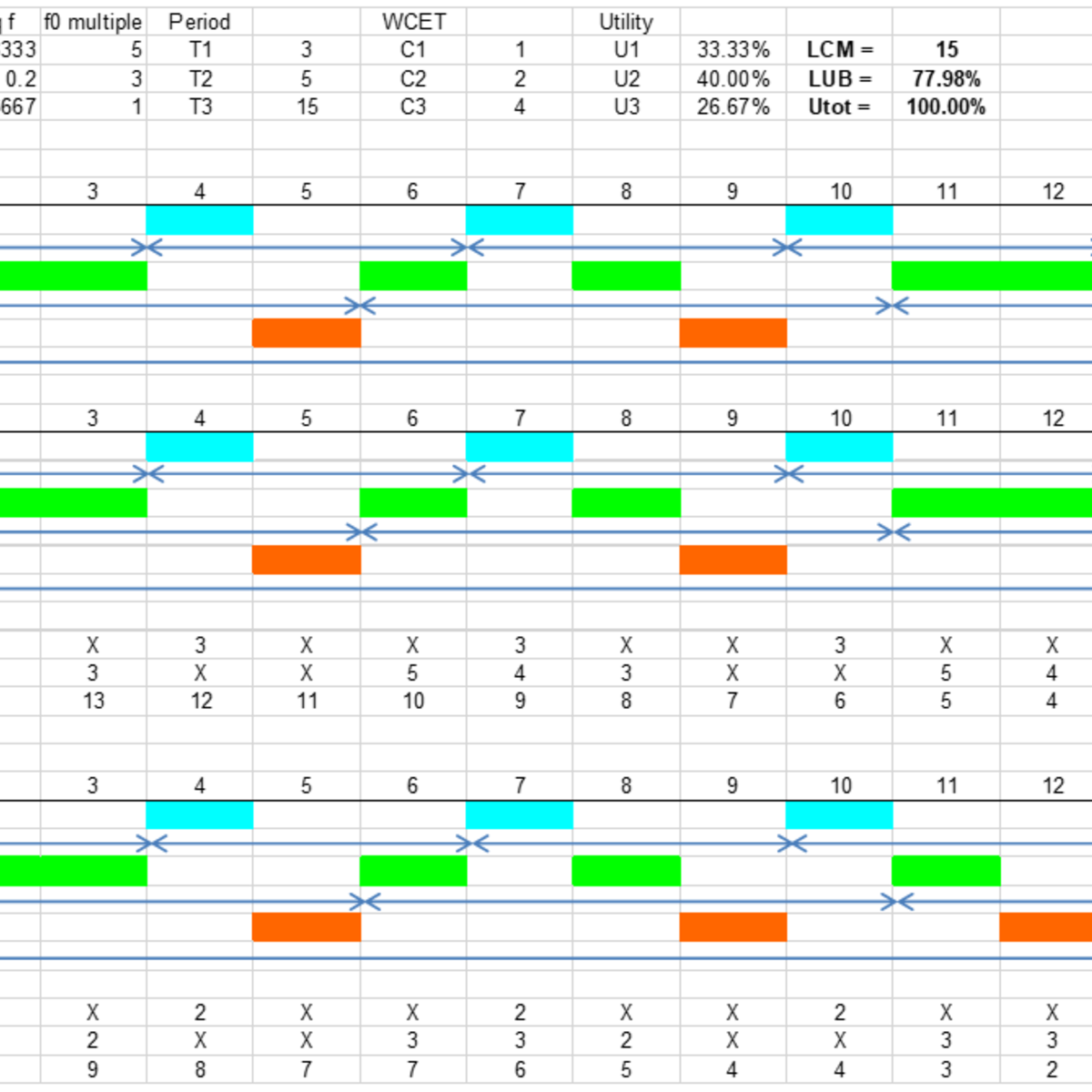
This course provides an in-depth and full mathematical derivation and review of models for scheduling policies and feasibility determination by hand and with rate monotonic tools along with comparison to actual performance for real-time scheduled threads running on a native Linux system. By the end of this course the learner will be able to full derive the fixed priority rate monotonic least upper bound for feasibility as well as justifying the rate monotonic policy and will be able to compare to dynamic priority scheduling including earliest deadline first and least laxity policies.
At the end of this course learners will be able to fully derive and explain the math model for the rate monotonic least upper bound as well as performing timing diagram analysis for fixed and dynamic priority software services. Tools to provide analysis will be learned (Cheddar) to automate timing analysis and to compare to actual performance.
Specific objectives include:
● Rate monotonic theory (complete math models)
● Differences between fixed priority rate monotonic policy and dynamic priority earliest deadline first and least laxity policies
● Scheduling theory and practice writing code for multi-frequency executives, priority preemptive RTOS services, and real-time threaded services on traditional operating systems (Linux)
● Building a simple Linux multi-service system using POSIX real-time extensions on Raspberry Pi 3b using sequencing and methods to log and verify agreement between theory and practice
● Timing diagram generation and analysis using Cheddar
Digitalisation in the Aerospace Industry
The online course Digitalisation in Aerospace aims at making you aware of special production requirements connected with digitalisation. You will learn about the role of robotics and automation in manufacturing and gain a better understanding of differing perspectives on research and manufacturing as well as the points where these intersect.
Materials in Oral Health
The drive for development of new and novel oral biomaterials has never been more important with many people using oral biomaterials today and seeing their benefits in restoring and improving their oral health for a more enjoyable lifestyle. The unique properties of biomaterials such as titanium (Ti), zirconia (ZrO2) and various polymeric materials have made them materials of choice in oral health: dental implants, oral and maxillofacial surgery, and even regenerative medicine. Oral biomaterials research today is an exciting and intensive multidisciplinary area that encompasses contributions from a wide range of fields from professional dentistry to biology, chemistry, physics, material science, and engineering.
Materials in Oral Health is a FREE 4-week course open to all interested learners. In the course, you will learn about the special properties and benefits of biomaterials including, titanium and titanium alloys, zirconia and other alloys, ceramics, and modern composites. You will gain insights of the practical use of these biomaterials in different aspects of dentistry and clinical implications. You will realize how contemporary dentistry is about unifying synthetic materials to living tooth and bone tissues. You will get in touch with the crucial roles of digital dentistry and learn about CAD/CAM technology in crown fabrication, 3D printing and digital orthodontics. And lastly, you will be introduced to procedures and testing methods used to test significant mechanical properties of biomaterials in the research laboratory.
We cordially invite those of you who wish to make a difference in tomorrow’s dental materials and oral health development to join us in the 4-week journey in Materials in Oral Health.
You can get recognition for completion of the course by obtaining a Course Certificate. You can refer to details on: https://learner.coursera.help/hc/en-us/articles/208280196
Fundamentals of Fluid-Solid Interactions
What is fluid-solid interactions ? It is what happens when the motions of a fluid and of a solid are somehow coupled. This happens all the time, around you when leaves flutter in the wind, inside you when your heart beats, above you when wings of a plane vibrate, under the sea... The idea behind this MOOC is to give you the basic tools to be able to predict and eventually mitigate things called flutter, galloping, sloshing, vortex-induced vibrations, added mass, to cite a few.
We are going to consider any possible domains of applications such as civil engineering, aerospace engineering, nuclear engineering , ocean engineering, biomechanics and even food processing !
This is why we called the course “Fundamentals of Fluid Solid Interactions ”. There are so many phenomena and so many models that we need to work together on the basic mechanisms .
If you want to see how fluid-solid interactions work, and be able to use that knowledge, join us !
A first session of the course was run in early 2016, with learners from over 100 countries. It is now available with subtitles, in English and now in Chinese.
See the video at http://goo.gl/YKSMnD
Spacecraft Dynamics Capstone: Mars Mission
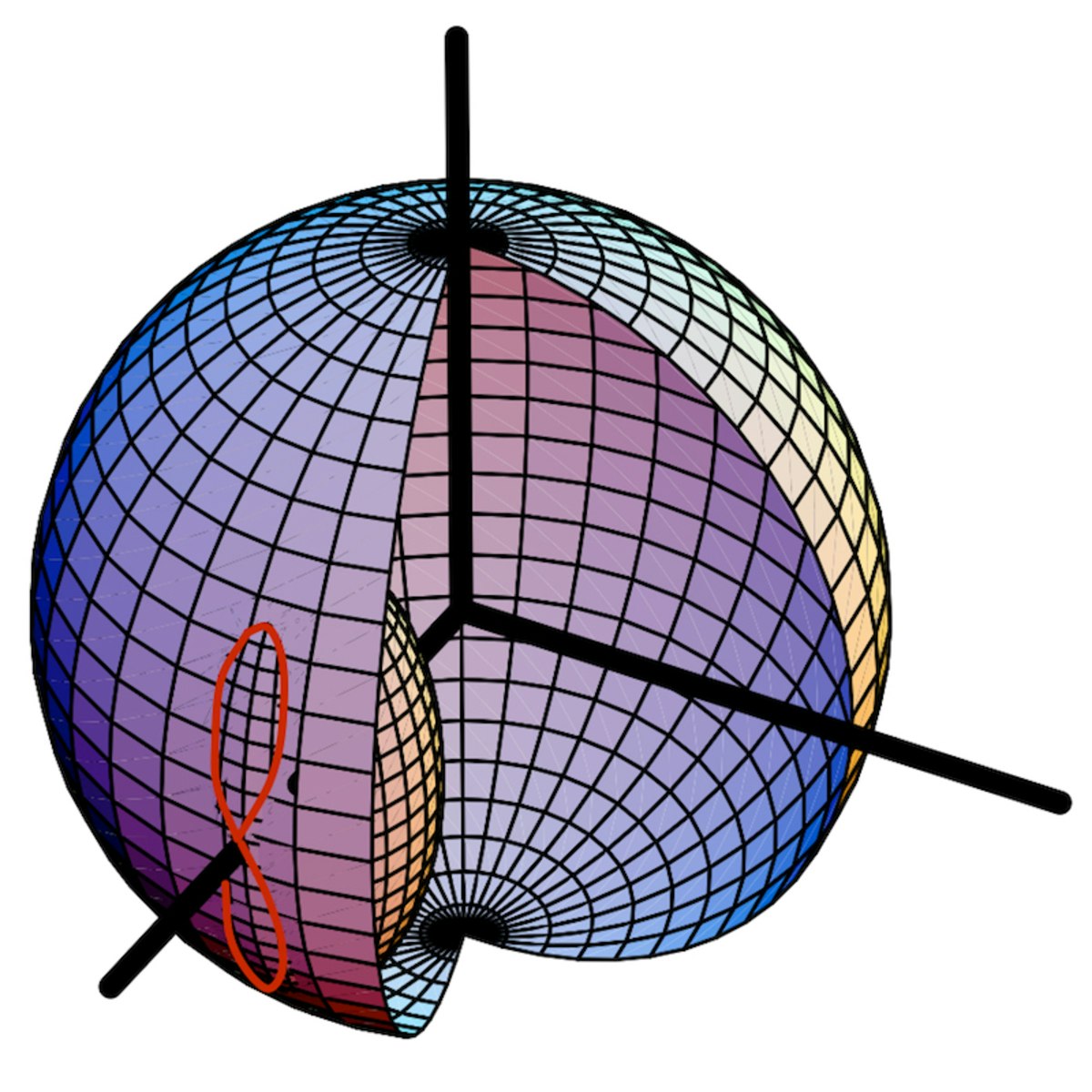
The goal of this capstone spacecraft dynamics project is to employ the skills developed in the rigid body Kinematics, Kinetics and Control courses. An exciting two-spacecraft mission to Mars is considered where a primary mother craft is in communication with a daughter vehicle in another orbit. The challenges include determining the kinematics of the orbit frame and several desired reference frames, numerically simulating the attitude dynamics of the spacecraft in orbit, and implementing a feedback control that then drives different spacecraft body frames to a range of mission modes including sun pointing for power generation, nadir pointing for science gathering, mother spacecraft pointing for communication and data transfer. Finally, an integrated mission simulation is developed that implements these attitude modes and explores the resulting autonomous closed-loop performance.
Tasks 1 and 2 use three-dimensional kinematics to create the mission related orbit simulation and the associated orbit frames. The introductory step ensures the satellite is undergoing the correct motion, and that the orbit frame orientation relative to the planet is being properly evaluated.
Tasks 3 through 5 create the required attitude reference frame for the three attitude pointing modes called sun-pointing, nadir-pointing and GMO-pointing. The reference attitude frame is a critical component to ensure the feedback control drives the satellite to the desired orientation. The control employed remains the same for all three pointing modes, but the performance is different because different attitude reference frames are employed.
Tasks 6 through 7 create simulation routines to first evaluate the attitude tracking error between a body-fixed frame and a particular reference frame of the current attitude mode. Next the inertial attitude dynamics is evaluated through a numerical simulation to be able to numerically analyze the control performance.
Tasks 8-11 simulate the closed-loop attitude performance for the three attitude modes. Tasks 8 through 10 first simulate a single attitude at a time, while tasks 11 develops a comprehensive attitude mission simulation which considers the attitude modes switching autonomously as a function of the spacecraft location relative to the planet.
Your dream job is just a tap away — only on the BoostGrad app.

View on Boostgrad App
View on Browser
Continue
Popular Internships and Jobs by Categories
Browse



© 2025 BoostGrad | All rights reserved